




Balen Shah at UN: Nepal’s Flood Disaster Becomes a Global Warning”

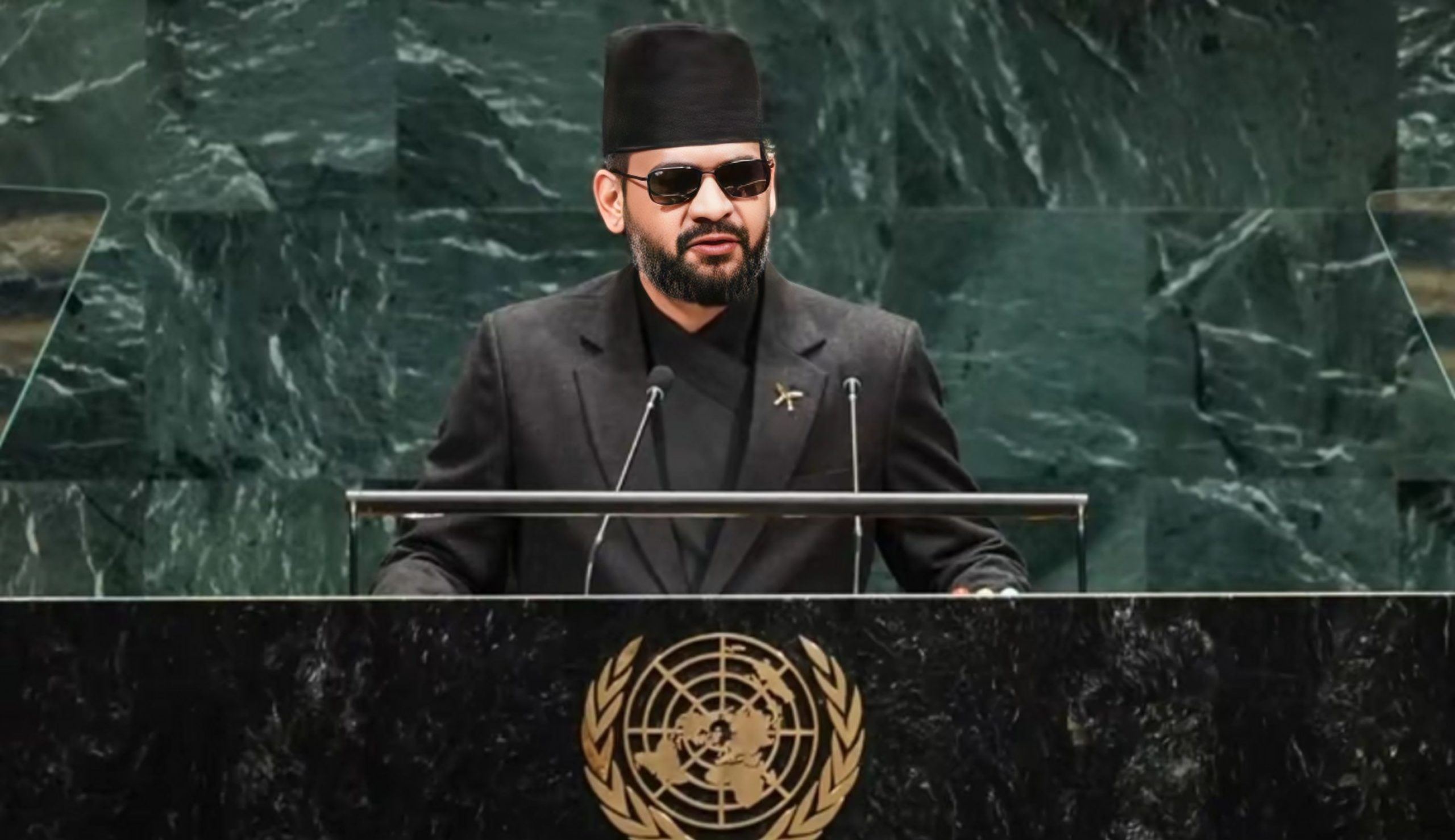
- Nepal Prime minister Mr.
- Balen Shah’s First UN Address Focuses on Nepal’s Devastating Flood Disaster and Climate Justice New York, September 25, 2026: Nepal Prime Minister Balendra Shah used his address to the 81st United Nations General Assembly on September 24 to put Nepal’s devastating August flood disaster, climate vulnerability and the country’s recovery needs at the centre of his international message.
Nepal Prime minister Mr.Balen Shah’s First UN Address Focuses on Nepal’s Devastating Flood Disaster and Climate Justice
New York, September 25, 2026: Nepal Prime Minister Balendra Shah used his address to the 81st United Nations General Assembly on September 24 to put Nepal’s devastating August flood disaster, climate vulnerability and the country’s recovery needs at the centre of his international message. Rather than focusing only on Nepal’s domestic political agenda, Shah called for greater international cooperation, grant-based assistance and stronger disaster-preparedness systems.
The speech came weeks after a catastrophic flash-flood and debris-flow event struck the Rasuwa area and the Bhote Koshi–Trishuli river corridor. The disaster caused extensive loss of life and destroyed homes, roads, bridges, hydropower infrastructure and other facilities.
A disaster that changed the focus of Nepal’s UN message:-
Shah told world leaders that Nepal had come to the General Assembly carrying what he described as a warning from the Himalayas. He connected the disaster to broader concerns about climate risks, saying that melting permafrost and instability in mountain slopes can increase the danger of ice-rock avalanches, floods and landslides.
However, scientific assessments emphasize an important distinction: the August 26 event is not technically classified simply as a conventional glacial-lake outburst flood. ICIMOD describes the event as involving a major collapse of rock and glacier ice that generated a powerful debris flow through the Lhende, Bhote Koshi and Trishuli systems. Scientists are still examining the precise chain of factors behind the collapse and the role of climate change in increasing the underlying risks.
Deaths, missing people and enormous reconstruction needs
The human toll has continued to change as rescue, recovery and identification operations progress.
In his UN speech, Shah said at least 1,400 people had been confirmed dead and more than 6,000 remained missing, while Nepal’s rapid assessment placed physical recovery needs at approximately 10 percent of GDP.
Earlier official figures released by Nepal’s Foreign Ministry reported 1,385 recovered bodies and approximately 5,130 people missing, while noting that the figures were subject to continuous updating. The same government briefing estimated total disaster damage at around $1.8 billion, losses at about $883 million, and the total reconstruction requirement at approximately $4.78 billion.
Reuters has also reported that the disaster caused extensive destruction along the Trishuli corridor, with thousands of people displaced or unaccounted for and major infrastructure affected.
Shah asks for grants rather than additional debt
One of the central elements of the Prime Minister’s UN message was Nepal’s request for international financial support.
Shah argued that a disaster affecting a climate-vulnerable developing country should not leave that country with additional heavy debt burdens. He called for adequate grant-based international support and said existing climate-finance mechanisms, including the Loss and Damage Fund and Global Environment Facility, were insufficient for countries facing disasters of this scale.
This request follows Nepal’s earlier international appeal for billions of dollars for recovery and reconstruction. Reuters reported earlier in September that Nepal was seeking around $5 billion in international assistance for the initial rebuilding effort.
Proposal for Himalayan climate cooperation
Shah also proposed establishing a Himalayan Climate Resilience Mechanism involving Nepal, India and China.
According to his speech, the proposed mechanism would focus on areas such as:-
Sharing satellite data and scientific expertise Monitoring potentially dangerous glacial lakes Improving cross-border early-warning systems Coordinating disaster assistance
Strengthening regional preparedness for mountain hazards. The proposal reflects the fact that Himalayan hazards can cross national borders and affect river systems and communities downstream.
Nepal’s hydropower sector was heavily affected The disaster also exposed the vulnerability of Nepal’s rapidly expanding hydropower infrastructure.
ICIMOD reported that the August event affected numerous hydropower projects along the Bhote Koshi and Trishuli corridor. Its assessment identified 12 operational projects with a combined 431.1 MW capacity and 15 projects under construction with a combined 470 MW capacity as affected, although the exact scale of the damage continues to be assessed. The destruction of infrastructure has implications beyond individual communities because hydropower is an important part of Nepal’s electricity and economic development strategy.
The bigger climate question ?
Nepal’s argument at the UN is based partly on the country’s relatively small contribution to global greenhouse-gas emissions compared with the scale of the climate-related risks it faces.
In his speech, Shah said Nepal contributes less than 0.1 percent of global greenhouse-gas emissions, while facing retreating glaciers, unstable mountain slopes and increasingly unpredictable rivers. He framed climate change as both a humanitarian and development issue because disasters can destroy infrastructure and force countries to redirect scarce resources toward reconstruction.
At the same time, scientists caution against automatically attributing one particular disaster entirely to climate change. ICIMOD’s current information on the Rasuwa event says the specific trigger was an ice-rock avalanche and that the relationship between this individual event and long-term warming requires careful scientific assessment.
A call for better preparedness:-
Shah concluded his speech by arguing that Nepal and other vulnerable countries need to move from emergency response toward long-term disaster preparedness.
He called for investment in:-
Early-warning systems → stronger infrastructure → climate resilience → insurance and innovation → better institutions → reduced fossil-fuel dependence. The message is particularly significant for Nepal because the August disaster demonstrated how quickly a mountain hazard can move downstream and overwhelm communities and infrastructure.
What the UN speech means for Nepal
The speech places three major issues together: disaster recovery, climate finance and Himalayan regional cooperation.
For Nepal, the immediate challenge is rebuilding communities and infrastructure while supporting families affected by deaths and disappearances. The longer-term challenge is reducing the risks associated with increasingly complex mountain hazards.
The international response will therefore be important not only for reconstruction funding but also for improving monitoring, early-warning systems, cross-border information sharing and resilient infrastructure.
Shah’s address has brought Nepal’s disaster experience directly into the wider international discussion over climate vulnerability and the responsibilities of countries and international institutions in responding to climate-related risks.
In short: Nepal’s Prime Minister used his first major UN address to turn the country’s devastating Himalayan disaster into a broader appeal for international assistance, climate finance, regional cooperation and stronger disaster preparedness—while the scale of the damage and the final s
cientific understanding of the disaster continue to develop.

प्रतिक्रिया


यो पनि पढौँ


यो पनि पढौँ